

Over the last thirty years, US airlines and the government have implemented laws and regulations to open the skies for passengers who use wheelchairs. The primary goal of these regulations is to make it easier for these passengers to embark and disembark – but do wheelchair passengers board first?
Wheelchair passengers board first, as the Air Carrier Access Act states that carriers must offer to preboard passengers that require this service at the gate. It also allows for a request for additional time to board so they can be assisted and seated before other passengers.
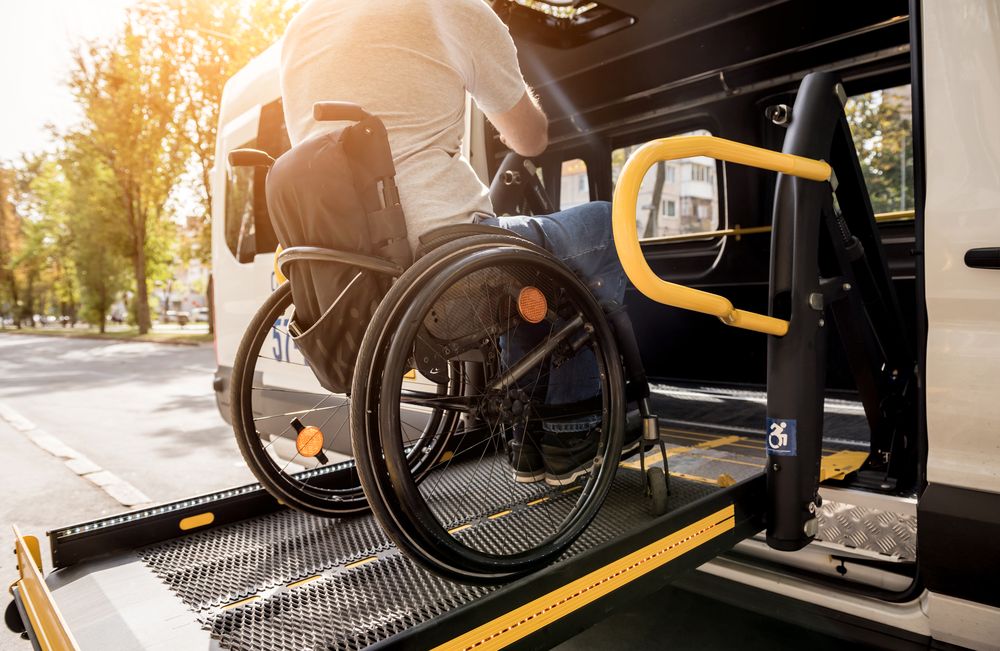
For the most part, wheelchair passengers will opt to board first, but they can opt not to. By allowing them to board first and be seated before other passengers enter the plane, carriers can ensure that there are no delays to the flight schedules.
What Is Preboarding For Wheelchair Passengers?
The terms of preboarding for passengers with disabilities are contained in the Air Carrier Access Act and governed by the Department Of Transport’s Aviation Consumer Protection Division, specifically 382.93.
This section of the regulations allows passengers identified as such to have enough time and space for boarding, be seated, and have their wheelchairs stowed safely before regular passengers embark.
Preboarding would give precedent to those disabled passengers over first-class, business class, celebrity or elite passengers, and those with children. For once, there is some common sense involved here.
Plane aisles are pretty narrow, and if you have been on a plane, you will know the chaos that ensues as more people board and look to find seats and stow luggage in the overhead storage units.
The combination of passengers and crew in those aisles would add to the overall frustration if disabled passengers had to fight through that. So, to alleviate the potential risk for flare-ups, preboarding for wheelchair passengers is mandated by ACAA regulations.
Do All Airlines Offer Preboarding?
The Air Carrier Access Act governs all airlines in the US, whether local or international. The law would apply to all flights that depart from any airport in the USA and those that arrive at any Airport in the USA.
Any air carrier registered in the USA is also subject to the ACAA regulations. Even where a carrier is international like United Airlines, for example, the rules governing the preboarding of disabled passengers would be in force.
In some instances, the airline may opt to board wheelchair passengers last, so there is no congestion in the aisles. With all the other passengers seated, it can be easier for gate assistants to plane wheelchair passengers, assist them to their seats, and stow powered wheelchairs.
Assistance Carriers Must Provide For Wheelchair Passengers
These airlines have to offer the option of preboarding for wheelchair passengers, and they also need to assist in other areas. These areas include loading and unloading wheelchairs on the plane and assisting with mobility on the flight, such as an onboard wheelchair to allow for lavatory visits as may be required.
Aircraft have a dedicated wheelchair storage compartment; they have to use this to stow wheelchairs at no extra cost to the passenger. The crew has to assist with mobility during the flight, which may mean helping with opening meal packages, moving passengers between seats, and retrieving devices or items that have been carried on.
Under ACAA section 382.21 (a), carriers must provide other onboard accessibility features, such as movable aisle armrests on at least half of their aisle seats. The seats should be easily reached and available to wheelchair passengers.
The lavatory facilities need to have grab bars, call buttons, locks, and faucets, and where an aircraft has two aisles, there must be one lavatory accessible by wheelchair. All aircraft with more than 60 seats and an accessible toilet must also provide an onboard aisle wheelchair.
Do Wheelchair Passengers Board First Internationally?
While the ACAA regulations apply to carriers and flights in the USA, its scope is limited to the USA. Still, some inbound international flights would also be subject to ACAA regulations.
For example, a British Airways flight between London and Rome would not fall under these regulations. However, British Airways flying to New York or departing from Washington would be subject to the preboarding rules.
Many European countries have also amended their flight regulations to accommodate the preboarding for disabled passengers to allow for seamless boarding and disembarking on their flights.
In any instance where the right to preboard has been denied to a disabled passenger requesting it, it violates ACAA regulations. Such an instance should be reported to the Department of Transport.
Do Airports Need Prior Notice For Wheelchair Passengers?
As a precaution, wheelchair passengers are advised to provide their carrier with 48 hours notice to ensure that any services required are in place before the flight is scheduled to depart. This notice would allow the airline to allocate resources as would be necessary.
This also facilitates the allocation of staff and preparation for assistance onboard during the flight and accommodation of access requirements in the airport and to the plane for embarking and disembarking.
Another preferred option where there are wheelchair passengers is early check-in. It’s advisable to get to the airport in good time and well ahead of the flight’s departure time and arrive for preboarding around 10-20 minutes before the boarding call is made for regular passengers.
This means a wheelchair passenger could be seated forty minutes before anyone else has boarded the plane. In most cases, wheelchair passengers could sit in the aircraft in first class if upgraded or in the first rows of economy class.
In some cases, they may be seated in the last few rows at the back to allow for easier accessibility from the rear doors of the aircraft.
Conclusion
Under the current Air Carrier legislation, wheelchair passengers must be allowed to board first. The airline must have all the accommodations on board and at the airport to enable disabled and wheelchair passengers to have the most efficient and comfortable traveling experience.
Resources
- https://wheelchairtravel.org/disabled-passengers-not-required-to-board-airplane-first/
- https://wheelchairtravel.org/air-travel/air-carrier-access-act-summary/
- https://www.nytimes.com/2022/08/08/travel/air-travel-wheelchair
- https://www.marketwatch.com/story/people-are-using-wheelchairs-at-airports-to-get-through-security-faster-2018-08-11
Looking for wheelchair transportation guidance?
If your interest relates to transporting a wheelchair user in a road vehicle, Estraints provides practical WTORS guidance, standards information and engineering tools.